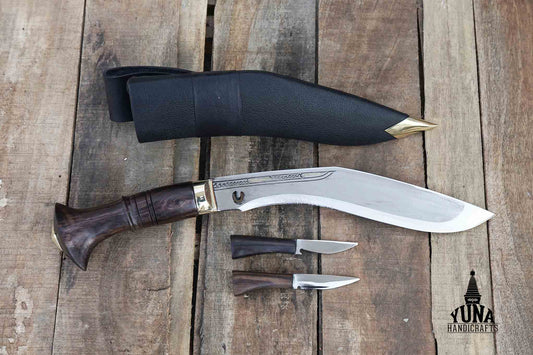
How to Make Kukri: A Complete Guide
How to Make Kukri: A Complete Guide
Introduction: The Art of Making a Kukri
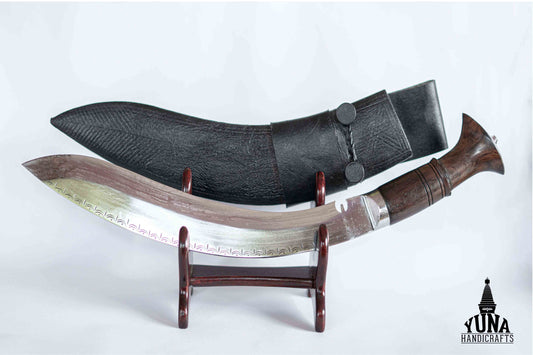
The kukri is one of the world's most iconic traditional blades, and the process of making one is a true art form. Passed down through generations of Nepalese blacksmiths — known as Kamis — the craft of kukri-making combines deep material knowledge, exceptional skill, and centuries of tradition. In this guide, we walk you through the traditional process of how a kukri is made.
Step 1: Selecting the Steel
The first step in making a kukri is selecting the right steel. Traditional kukris are forged from high-carbon steel, which provides the right balance of hardness and toughness. The carbon content affects the properties that can be obtained by forging and heat treatment, and skilled makers know how to work with the steel to achieve the desired characteristics.
Step 2: Heating and Forging
The steel is heated in a traditional forge until it reaches the right temperature — typically a bright orange or yellow colour. The blacksmith then hammers the heated steel repeatedly, shaping it into the distinctive forward-curving profile of the kukri. This process requires years of practice to master, as the artisan must control the temperature, the angle of the hammer blows, and the shape of the blade simultaneously.
Step 3: Shaping the Blade
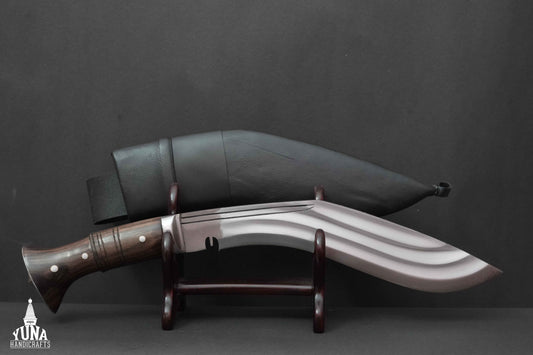
Once the basic shape is established, the blacksmith refines the blade profile, creating the correct curve, thickness, and taper. The distinctive notch near the base of the blade — called the "cho" — is also formed at this stage. The blade is repeatedly heated and hammered until it achieves the correct proportions.
Step 4: Heat Treatment
Heat treatment is a critical step in kukri-making. The blade is heated to a specific temperature and then quenched — rapidly cooled — to harden the steel. It is then tempered — reheated to a lower temperature — to reduce brittleness and achieve the right balance of hardness and toughness. This process requires deep knowledge of metallurgy and years of experience.
Step 5: Grinding and Polishing
After heat treatment, the blade is ground to its final shape and sharpened. The blacksmith uses grinding wheels and stones to refine the blade profile, create the bevels, and achieve the desired edge geometry. The blade is then polished to a smooth finish.
Step 6: Making the Handle
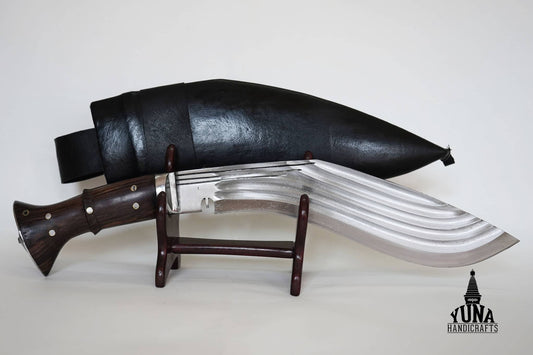
The handle of a kukri is typically made from natural materials such as hardwood, buffalo horn, or bone. The handle material is shaped and fitted to the tang — the extension of the blade that runs into the handle. The handle is then secured with pins or rivets and polished to a smooth finish.
Step 7: Making the Scabbard
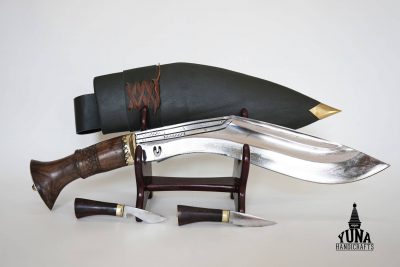
The scabbard is traditionally made from wood covered in leather. The wooden core is shaped to fit the blade, and the leather is stretched over it and stitched or glued in place. Metal fittings may be added for decoration and durability. The scabbard also holds the karda (small knife) and chakmak (sharpening tool) that accompany most authentic kukris.
Step 8: Final Assembly and Quality Check
The final step is assembling all the components and checking the quality of the finished kukri. The blade should be sharp, well-balanced, and properly fitted to the handle. The scabbard should fit the blade securely. Any final adjustments are made at this stage.
Conclusion
Making a kukri is a complex and demanding craft that requires years of practice and deep knowledge of materials and techniques. The result is a blade that is both functional and beautiful — a true work of art that embodies centuries of Nepalese blacksmithing tradition. If you would like to own a handmade kukri from Nepal, browse our collection at Yuna Handicrafts.
Shop Handmade Kukri Knives from Nepal
At Yuna Handicrafts, every kukri is hand-forged in Nepal by master bladesmiths using centuries-old techniques. Own a piece of living Himalayan heritage today.
- All Handmade Kukris from Yuna Handicrafts — Browse our complete handmade kukri collection
- Original Kukri Knife for Sale — Authentic, hand-forged kukris direct from Nepal
- All Traditional Heritage Kukris — Explore the full range of heritage kukri styles
- Kukri Blades for Sale — Premium hand-forged kukri blades
- Authentic Nepalese Kukri from the Himalayas — Certified authentic, straight from the craftsmen
- Buy Kukris Online from Nepal — Authentic, hand-forged kukris shipped worldwide