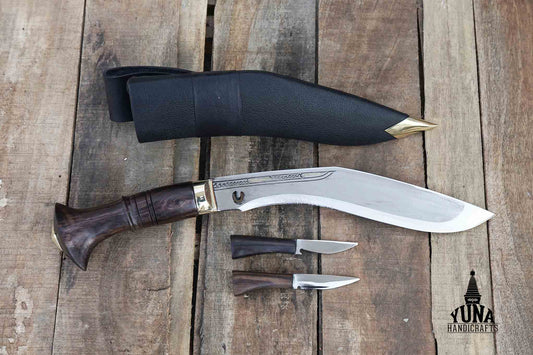
How to Maintain a Kukri: The Only Guide You Need
How to Maintain a Kukri: The Only Guide You Need
Introduction
A kukri is a significant investment — both financially and culturally. With proper care and maintenance, a high-quality handmade kukri from Nepal can last for generations. In this guide, we cover everything you need to know about maintaining your kukri to keep it in excellent condition.
Cleaning Your Kukri
After each use, clean your kukri blade thoroughly. Wipe the blade with a clean, dry cloth to remove any moisture, dirt, or residue. If the blade is heavily soiled, you can use a mild soap and water solution, but make sure to dry the blade completely afterwards. Never leave a wet blade in its scabbard, as this can cause rust and damage to both the blade and the scabbard.
Preventing Rust
High-carbon steel — the traditional material for kukri blades — is prone to rust if not properly maintained. After cleaning and drying the blade, apply a thin coat of oil to protect the metal. Gun oil, mineral oil, or a dedicated blade oil all work well. Apply the oil with a clean cloth, making sure to cover the entire blade surface. Avoid using too much oil, as excess oil can damage the leather scabbard.
Storing Your Kukri
Store your kukri in a cool, dry place away from moisture and humidity. If you are storing the kukri for an extended period, apply a generous coat of oil to the blade before storing it. Check the blade periodically for any signs of rust or corrosion, and address any issues promptly.
If you are storing the kukri in its scabbard, make sure the scabbard is dry before inserting the blade. A damp scabbard can cause rust on the blade and damage to the leather.
Caring for the Handle
The handle of your kukri — typically made from hardwood, buffalo horn, or bone — also requires care. Keep the handle away from excessive moisture and direct sunlight, which can cause the material to crack or warp. Periodically apply a small amount of linseed oil or beeswax to wooden handles to keep them conditioned and prevent drying out.
Caring for the Scabbard
The leather scabbard of your kukri also requires regular care. Apply a leather conditioner or beeswax periodically to keep the leather supple and prevent cracking. Keep the scabbard away from excessive moisture and direct sunlight. If the scabbard gets wet, allow it to dry naturally at room temperature — do not use heat to dry it, as this can cause the leather to crack.
Sharpening Your Kukri
A sharp kukri is a safe kukri. A dull blade requires more force to cut, increasing the risk of slipping and injury. Sharpen your kukri regularly using a whetstone or the chakmak (sharpening tool) that comes with most authentic kukris. Maintain a consistent angle of around 15-25 degrees when sharpening. Start with a coarser grit and finish with a finer grit for the best results.
Checking for Damage
Periodically inspect your kukri for any signs of damage, including chips or cracks in the blade, looseness in the handle, or damage to the scabbard. Address any issues promptly to prevent them from worsening. If the handle becomes loose, it should be re-secured by a skilled craftsman.
Conclusion
With proper care and maintenance, your handmade kukri from Nepal will remain in excellent condition for generations. The key is to keep the blade clean, dry, and oiled, and to store it properly when not in use. If you are looking for a new kukri or replacement accessories, browse our collection at Yuna Handicrafts.
Shop Authentic Kukri Knives from Nepal
At Yuna Handicrafts, every kukri is hand-forged in Nepal by master bladesmiths using centuries-old techniques. Find your perfect kukri today.
- Original Kukri Knife for Sale — Authentic, hand-forged kukris direct from Nepal
- Kukri Blades for Sale — Premium hand-forged kukri blades
- All Traditional Heritage Kukris — Explore the full range of heritage kukri styles
- All Gurkha Kukris from Nepal — The legendary blade of the Gurkha warriors
- Authentic Nepalese Kukri from the Himalayas — Certified authentic, straight from the craftsmen
- All Handmade Kukris from Yuna Handicrafts — Browse our complete kukri collection